Home / Articles / Droppings identification
IdentificationRat vs. Mouse Droppings: How to Tell Them Apart
Mouse droppings are 1/8 to 1/4 inch long, like a grain of rice. Norway rat droppings are about 3/4 inch, closer to a raisin. Where you find them tells you just as much as their size.
Updated November 4, 2026
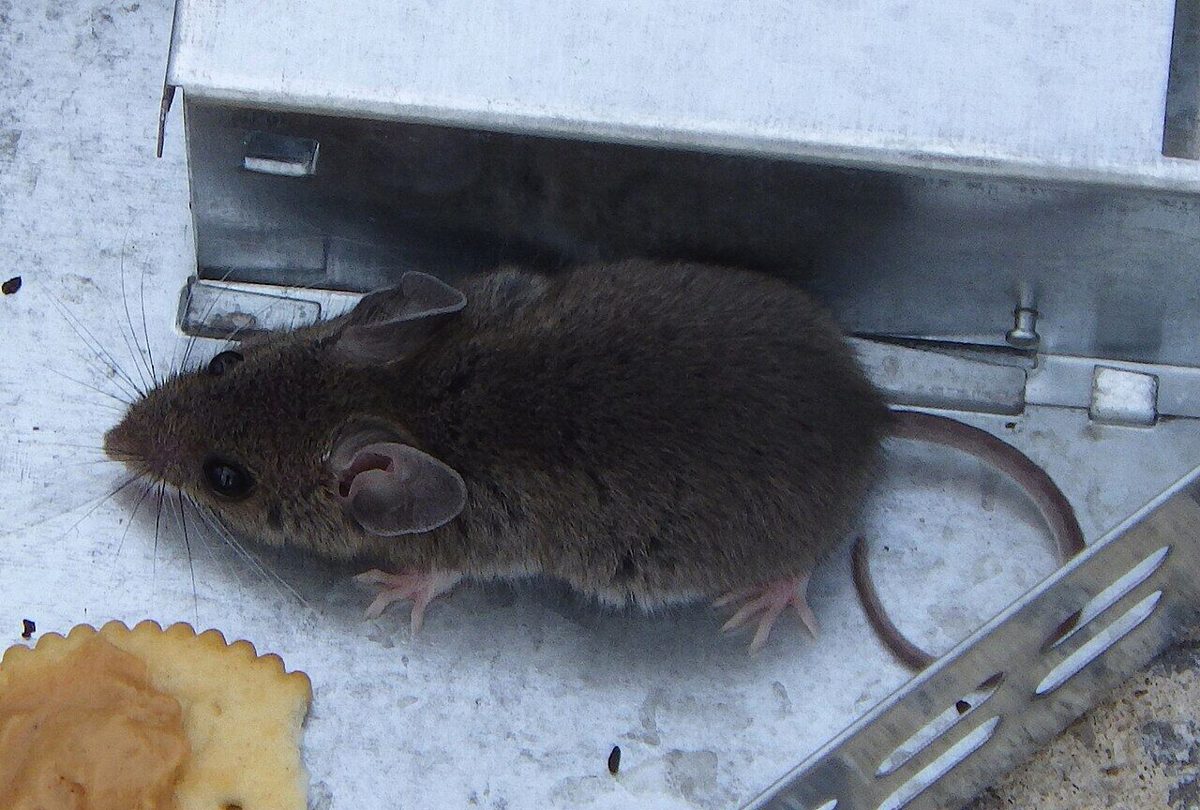
The quickest way to tell rat droppings from mouse droppings is size. According to University of Nebraska extension figures, house mouse droppings are about 1/8 to 1/4 inch long, and Norway rat droppings are about 3/4 inch. Mouse droppings look like dark grains of rice with pointed ends. Rat droppings are larger, thicker and more like a raisin or a short capsule.
Location and quantity help confirm it. This article walks through what to look for, how to tell fresh droppings from old ones and how to clean up without making yourself sick.
Mouse droppings
- Size: about 1/8 to 1/4 inch long.
- Shape: thin, with pointed ends. The CDC notes rodent droppings are pointed at one end and often contain hair.
- Quantity: many, scattered. Mice leave droppings as they move, so you find them along routes rather than in one pile.
- Where: kitchen drawers, cabinets, under sinks, behind the stove and refrigerator, pantry shelves, along baseboards, in the garage and in attic or crawl space insulation.
In Richmond homes, mouse droppings in the silverware drawer or on the top of kitchen cabinets often mean mice are coming up through gaps around pipes from the crawl space.
Rat droppings
- Size: Norway rat droppings are about 3/4 inch long.
- Shape: thicker, with blunt ends, like a capsule.
- Quantity: fewer than mice, often in groups.
- Where: along walls in basements and crawl spaces, near trash cans, in garages and sheds, along fences, near burrows and in alleys.
If you find large droppings inside the living space, take it seriously. Norway rats usually live outside and enter from below, so droppings in a kitchen mean an opening big enough for a rat.
Want a provider to look at it?
Describe what you are seeing and where. The call is free and goes to an independent rodent control provider who serves Richmond and the nearby counties.
Other droppings people confuse with rodents
- Squirrel droppings are similar in size to rat droppings but are often rounder and lighter in color, and squirrels are active in attics during the day.
- Bat droppings collect in piles under roosts and crumble into shiny bits when crushed. Do not handle them; they need their own cleanup approach.
- Cockroach droppings are tiny specks or smears, much smaller than mouse droppings.
- Chipmunk and vole droppings may show up in garages and sheds near wooded lots in Henrico and Chesterfield.
If you are not sure, a rodent inspection will confirm it along with tracks, gnaw marks and entry points.
Other signs that back up what the droppings say
Droppings are the most common clue, but they are not the only one. Gnaw marks help: University of Nebraska extension lists house mouse gnawing at about 1/12 inch wide and Norway rat gnawing at about 1/6 inch. Mice leave fine, scratchy tooth marks on food boxes and soap. Rats leave rougher, wider grooves on wood, plastic cans and pipe insulation.
Rub marks are another sign. Rats leave dark, greasy smears where their fur brushes along walls, pipes and the bottom of fences on routes they use every night. Mice leave smaller smudges near holes. Nesting material tells you something too: shredded paper, fabric or insulation tucked into a drawer, behind a dishwasher or in a box in the garage usually means mice. Burrows outside along the foundation or fence mean rats.
Fresh or old?
Fresh droppings are dark, moist and soft. Older droppings are dry, dull, gray and crumble. But the CDC notes that it can be hard to know if rodents are still active just by looking at droppings. Its suggestion: clean the area safely, then check again. New droppings after cleaning mean rodents are still there.
This is also a good way to track progress after trapping or sealing. Clean, wait a few days and look.
How to clean up droppings safely
Do not sweep or vacuum droppings. The CDC says that can put tiny droplets containing viruses into the air. Instead:
- Put on rubber or plastic gloves.
- Spray the droppings and any urine with a disinfectant or a fresh bleach solution of 1 1/2 cups of bleach in 1 gallon of water until very wet.
- Let it soak for 5 minutes.
- Wipe up with paper towels and throw them in a covered garbage can that is emptied regularly.
- Mop or sponge the area with disinfectant.
- Wash gloved hands with soap and water before taking the gloves off, then wash your hands again.
For heavy contamination in an attic, crawl space, shed or garage, the CDC recommends extra precautions, and a professional cleanup may make sense.
What to do next
Once you know what you have, act on it. Mouse droppings in the kitchen call for traps along walls and sealing gaps under sinks and behind appliances; see how to get rid of mice in Richmond. Rat droppings in the crawl space or garage call for a look outside for burrows and a check of the foundation; see how to get rid of rats in Richmond. Either way, throw out any food the rodents could have reached.
Call a local rodent provider
The call is free. Describe the problem, ask what the visit includes, and get a written price before any work starts.
Questions people ask
How big are mouse droppings?
About 1/8 to 1/4 inch long, according to University of Nebraska extension figures, with pointed ends.
How big are rat droppings?
Norway rat droppings are about 3/4 inch long, with blunt ends.
Are old droppings still dangerous?
Treat all droppings with care. Use the CDC wet cleanup method instead of sweeping or vacuuming.
Do droppings mean I still have mice?
Not always. Clean the area, then check again. New droppings after cleaning mean rodents are still active.