Rat Control in Richmond, VA
Norway rats burrowing along the foundation or running the alley behind the house? Get them removed and the low entry points sealed before they gnaw wiring or push deeper inside.
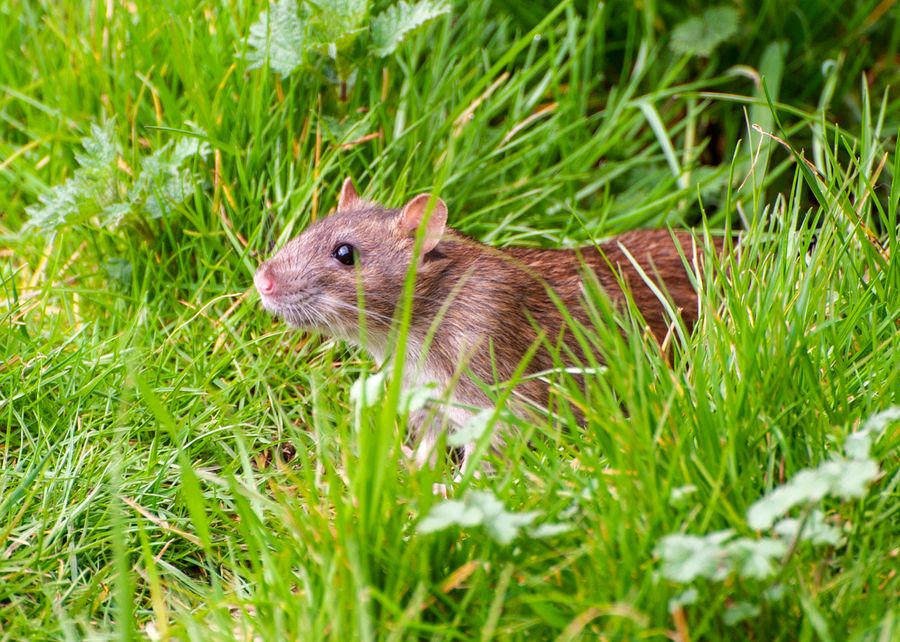
Rat control in Richmond is mostly a Norway rat story. The Norway rat is a heavy burrower that lives down low, along foundations, in alleys, and under sheds and porches. Richmond's historic row-house neighborhoods, the Fan, Church Hill, the Museum District, Jackson Ward, and Oregon Hill, give these rats everything they want: shared walls, tight alley networks, and aging combined sewer lines that work like underground highways. A rat can come up a sewer lateral or dig in along an old brick foundation. Telling the rat from a mouse and finding where it gets in is the first job when you call 804-630-2216.
Rats matter more than mice for one reason. They gnaw. A rat can chew through soft utility lines, subfloor, and wiring, and their teeth never stop growing, so they never stop. Richmond's humid climate and mild winters keep rats active much of the year, so the pressure does not shut off the way it does in colder places. The rat you almost always have here is the Norway rat down low, with roof rats a second concern on older, tree-shaded streets. Here is how the work goes.
Norway rats: the Richmond alley and foundation problem
Norway rats burrow along foundations and enter through gaps at the sill, around sewer and utility lines, and along the shared walls of row houses. In the Fan, Church Hill, the Museum District, and Oregon Hill, dense Victorian and brick homes sit shoulder to shoulder over old combined sewer lines, and that gives Norway rats food, cover, and a way to travel underground from one block to the next. The alleys behind these streets are their surface highway, lined with trash cans, cover, and easy routes to every back door.
The signs are low: burrow openings two to four inches wide near the foundation or along the alley fence line, greasy rub marks where rats squeeze under gates and along the base of walls, and heavier movement at ground level rather than overhead. Norway rat control means clearing the burrows and runways, then sealing the low entry points with metal-backed material so the rats cannot dig or gnaw their way back in.
Roof rats: the older, tree-shaded streets
Roof rats are sleek climbers that live up high, in attics and soffits. In Richmond they turn up on older, wooded streets where mature trees touch the roofline and give a rat a path off the ground and into the attic. Church Hill's leafier lots and the tree-lined blocks around the Museum District are the kind of place a roof rat climbs in.
If the scratching is clearly overhead at night, a local technician confirms whether it is roof rats using the trees and the roofline or, just as often, house mice that have moved into the attic and wall voids. The species drives the plan, because a high climber and a low burrower are removed and sealed out in completely different parts of the house.
Why sealing matters more with rats
A rat that can gnaw will reopen a soft patch, so the sealing has to be done with steel mesh, hardware cloth, and rodent-proof sealant, not foam or steel wool alone. That is the difference between a fix that lasts and one that fails in a season. With Norway rats in Richmond, most of the sealing happens low, at the foundation, the sill, the sewer and utility penetrations, and the gaps where shared walls meet in a row of houses.
It also protects the home. Rats gnawing near wiring is a real fire risk, and burrowing under a foundation or along an old sewer line causes damage that adds up. Getting them out and closing the entry points is home protection, not just rodent removal. Ask for the inspection first so the plan matches your specific home, and pair it with exclusion and sealing.
One call for the whole house
Because Richmond's rat problems live low, along foundations, alleys, and shared walls, a real fix looks at the whole base of the house, not one room. The inspection confirms Norway rats and maps every burrow and gap before any work starts.
You get an honest read, upfront pricing, and no obligation. Pair trapping with sealing, and, where rats have fouled a crawl space or basement, add cleanup to finish the job.
Richmond rat control questions
Are the rats in Richmond roof rats or Norway rats?
Almost always Norway rats. They live low, along foundations and alleys, burrow to get in, and travel the old combined sewer lines under the row-house neighborhoods. Roof rats, the high climbers, show up mainly on older, tree-shaded streets. The inspection confirms which rat you have.
Can rats really come up through the sewer line?
Yes. In Richmond's older neighborhoods, aging sewer laterals and combined lines give Norway rats an underground route, and a rat can surface through a broken lateral or a floor drain. The inspection checks for that and the plan seals it off.
How long does rat control take?
Removing an active rat population usually takes one to a few weeks of trapping and follow-up, depending on the size of the colony. Sealing can often be done alongside it. You get a timeline after the inspection.
Will the rats come back?
Not through the same openings if they are sealed properly with metal-backed materials at the foundation, sill, and utility lines. Rats return when trapping is done without sealing, because the entry points are still open for the next one to dig into.