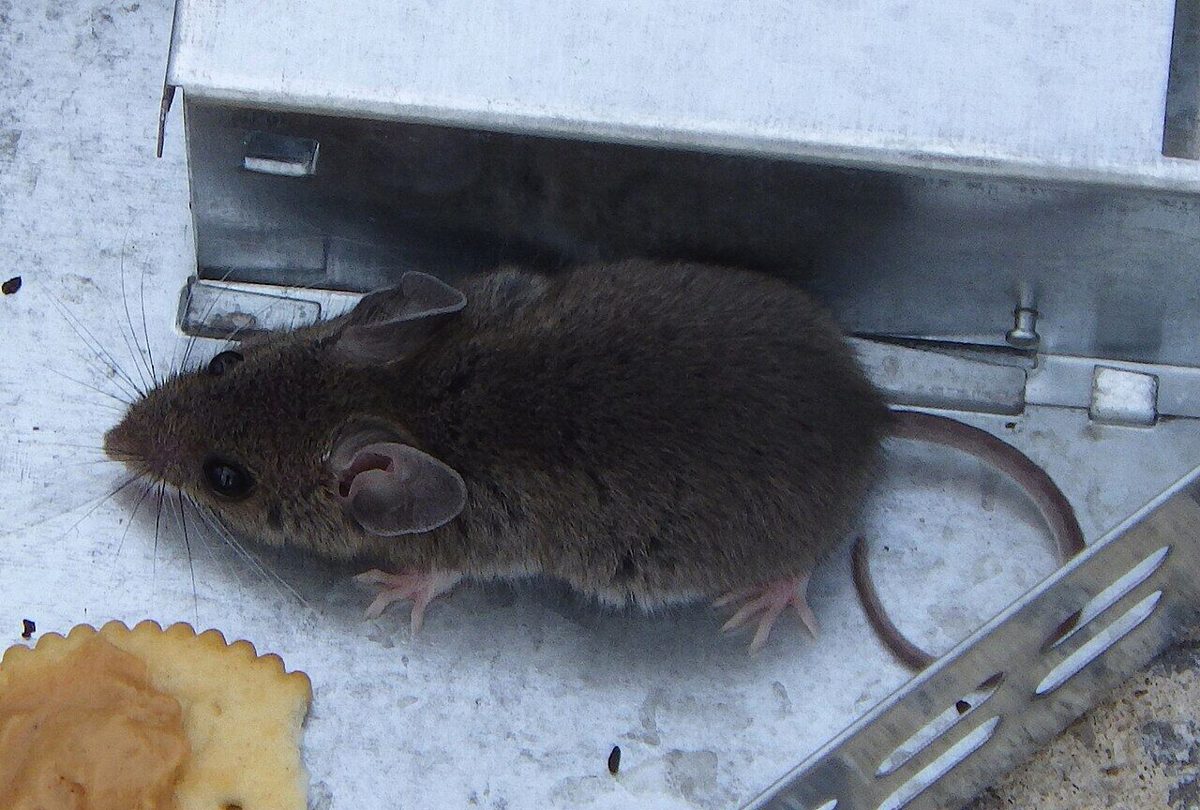
How mice end up in walls
Mice do not usually live in the middle of a wall. They use wall cavities as protected paths between the places they nest and the places they eat. They get into the void from below, through gaps where pipes and wires pass through the bottom plate from the crawl space or basement, or from above, through gaps in the attic. Then they come out wherever the wall has an opening: behind the dishwasher, under the kitchen sink, behind the stove, at a gap in the baseboard.
That is why mice in walls are rarely solved by cutting into the wall. A technician finds where the mice enter the void and where they exit into rooms, traps them at the exits and seals the entry points below and above. Drywall gets opened only when there is no other choice, such as reaching a dead mouse.
Rats can also get into walls, especially in older homes. Rat noise is heavier and slower, sometimes with gnawing that sounds like scraping. If you are not sure which you have, our noises article describes the differences.
What a thorough job includes
- Listening and asking about where and when you hear the noise
- A crawl space, basement or attic check directly above or below the noisy wall
- Finding exits into rooms: under sinks, behind appliances, at baseboards and around pipes
- Traps at the exits, inside cabinets or behind appliances
- Sealing pipe and wire openings in the bottom and top plates where possible
- Sealing the exterior entry that let mice into the house in the first place
- Follow-up checks until the noise and new droppings stop
Need mice in walls removal in Richmond?
Describe what you are seeing and where. The call is free and goes to an independent rodent control provider who serves Richmond and the nearby counties.
Step by step
Locate the noise
Keep track of which wall, what time and whether the sound moves up, down or along the wall.
Check below and above
Most wall voids connect to a crawl space, basement or attic. Droppings there show the route.
Trap the exits
Traps go where the mice come out to feed, not inside the wall.
Seal the routes
Gaps around pipes, wires and ducts entering the wall get sealed with copper mesh, sealant or metal.
Confirm it is quiet
No noise and no new droppings for about a week is the sign the job is done.
Wall voids in Richmond houses
Many older Richmond homes, including row houses in the Fan and Church Hill and early suburban houses in Northside, have plaster walls and framing styles where wall cavities run up through more than one floor. A mouse in the crawl space can climb inside the wall to the second floor without ever entering a room. Chimneys, old radiator pipe chases and abandoned gas lines add more paths.
Shared walls make it harder. In a row house or duplex, mice may live on the neighbor's side and use the shared wall as their hallway. Sealing your side at the floor and ceiling, under sinks and behind appliances is the realistic goal. Newer homes are easier, but plumbing walls between a kitchen and a garage or crawl space are still the usual routes.
A few things help while you wait for a visit. Keep food in sealed containers, clear the cabinet under the kitchen sink so traps can go there, and pull the stove and refrigerator out if you can to look for droppings behind them. Do not stuff foam into the gaps you find yet. If mice are inside the wall when you seal the exits, they may die there or chew a new way out somewhere less convenient.
Mice in Walls Removal questions
Will the technician cut open my wall?
Usually not. Mice are trapped where they leave the wall and the entry gaps are sealed. Openings are only cut to reach a dead mouse or when no other access exists.
Can I put poison in the wall?
That often leads to a dead mouse in the wall and weeks of odor. Trapping at the exits is the better approach.
How do I tell mice from rats in the wall?
Mice sound light and quick. Rats are heavier, slower and sometimes gnaw loudly. Droppings near the wall settle it.
Why do I only hear them at night?
Mice and rats are mostly active at night, and the house is quieter, so you notice them more.
Could it be something other than mice?
Squirrels make noise in walls and attics during the day. Insects and settling pipes can also tick and creak. A technician can confirm.
How long does it take to get mice out of walls?
Often one to three weeks once traps are at the exits and entry gaps are sealed. Big or long-running problems take longer.
Do I need to tell my landlord about mice in the walls?
Yes. Virginia law requires tenants to promptly notify the landlord of insects or pests, and the landlord usually controls repairs to walls, pipes and the crawl space.
Get a local provider on the phone
Tell them what you found and where. Ask what the visit includes and whether sealing is part of the price.